
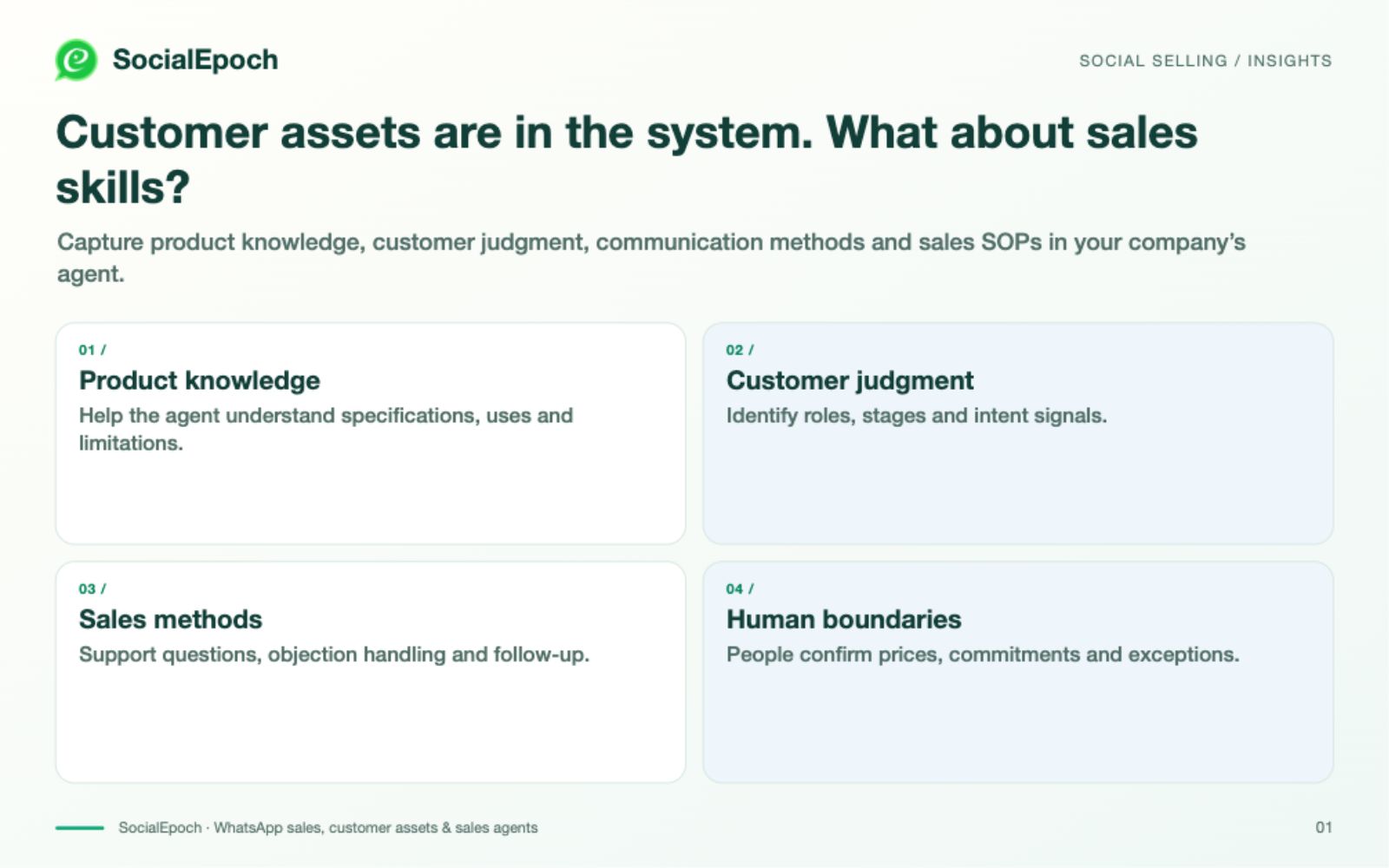
Many international businesses are already bringing WhatsApp customers into SalesEpoch: identity, source, conversation history, ownership and next actions are becoming part of company processes.
Yet managers then face a harder question: with the same products, enquiries and quotation conditions, why does the quality of sales progress still vary so much?
The difference is often how people understand customers, ask questions, time quotations, handle objections and follow up. Customer data enters the system, but effective methods remain personal experience. SalesAgent gives reusable sales skills a structured home too.
Why training alone struggles to reproduce top-seller experience
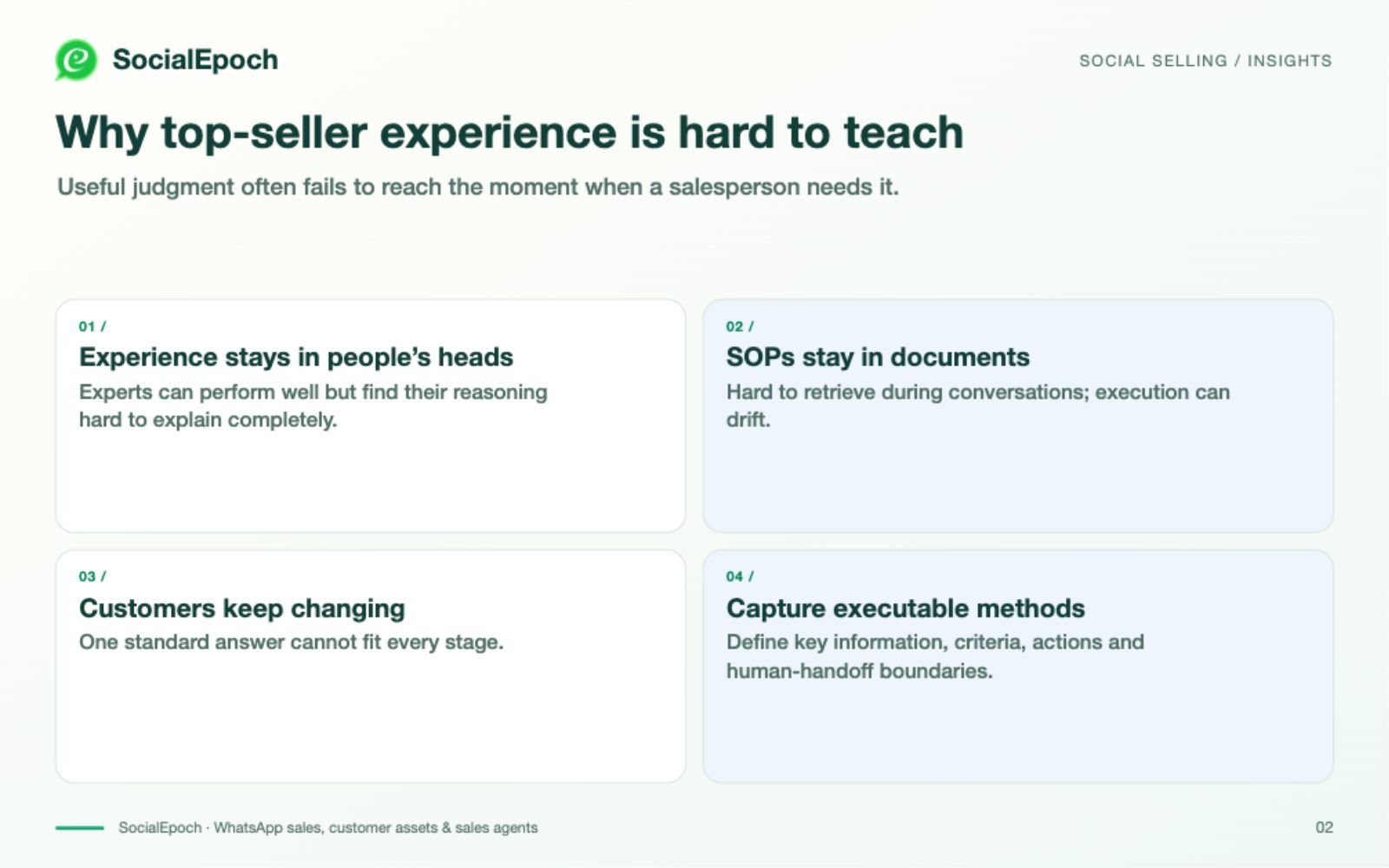
When asked for a price, a top seller considers country, business model, quantity, intended use and previous discussions before deciding which details to confirm and what to propose. A newcomer may memorise product information but still miss the important issue in a live conversation.
Training has three common gaps: expertise is hard to articulate completely; scripts and SOPs sit in documents that are difficult to find during conversations; and changing customer circumstances make one standard answer unsuitable for every stage.
Capturing sales capability therefore means defining important information, assessment criteria, next actions and human-handoff conditions as executable rules—not simply copying chat histories into a knowledge base.
Five types of company capability for SalesAgent
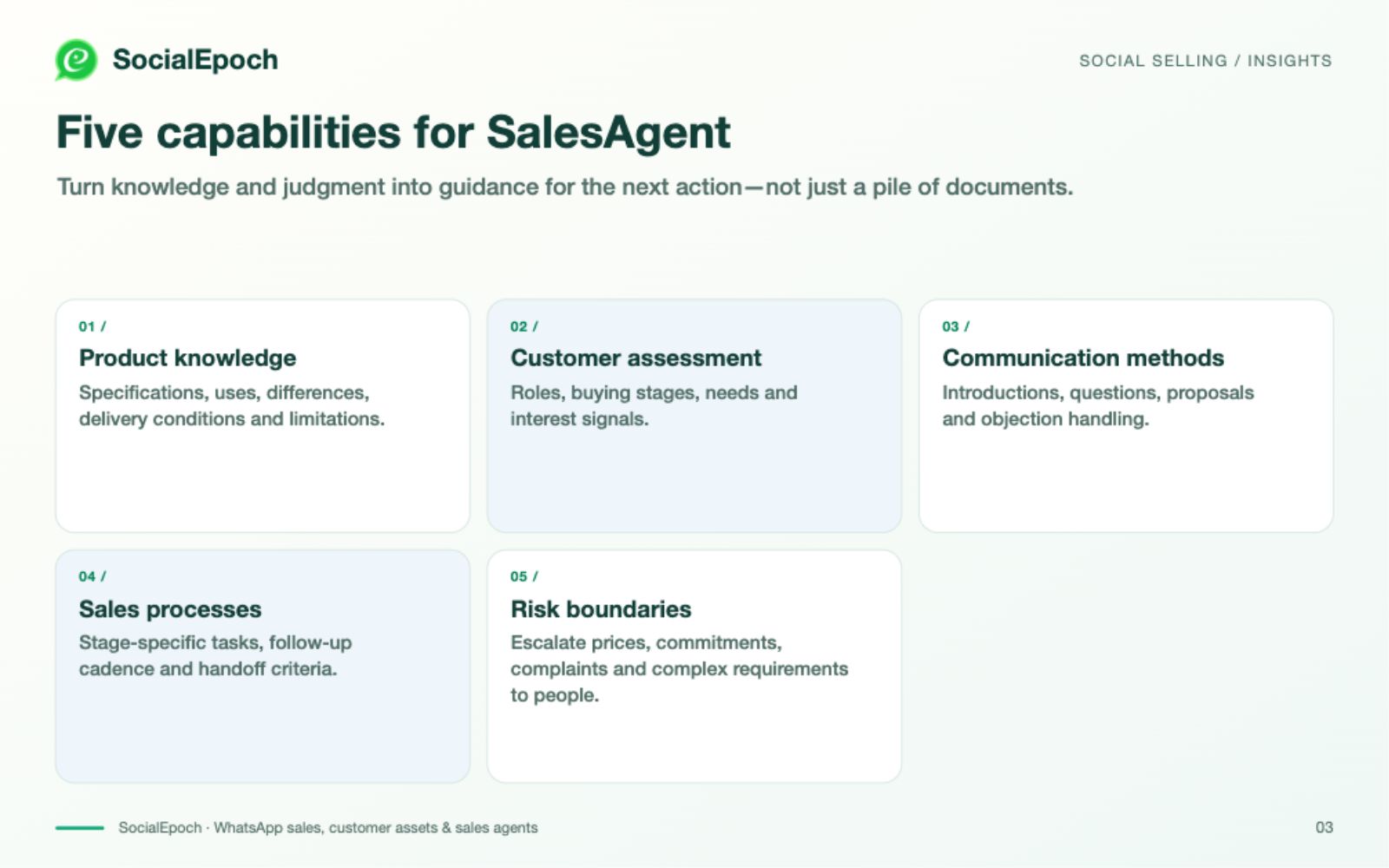
Product knowledge covers specifications, uses, differences, delivery conditions and limitations. Customer assessment covers roles, buying stages, needs and intent signals. Communication methods include introductions, questions, proposals, objections and re-engagement. Sales processes define tasks, cadence and handoffs. Risk boundaries specify who must confirm prices, commitments, complaints and complex requirements.
Combined with SalesEpoch context, these resources can help organise requirements, prepare responses, identify missing information and suggest next actions. AI participates in repeatable work using company-approved methods; it does not take over every conversation.
People remain responsible for relationship judgments, negotiation, price commitments and exceptions. The agent provides more consistent information and process support, helping newcomers avoid mistakes and established methods spread across the team.
Pilot frequent scenarios with clear boundaries
SalesAgent should not initially cover the entire sales process. Start with a frequent, repetitive scenario that affects quality and can be reviewed clearly.
Examples include collecting country, use, quantity and purchasing timing for new enquiries; checking information before quoting; preparing follow-up for silent customers based on prior interests; and flagging complex customisation, negotiation or complaint risk for human takeover.
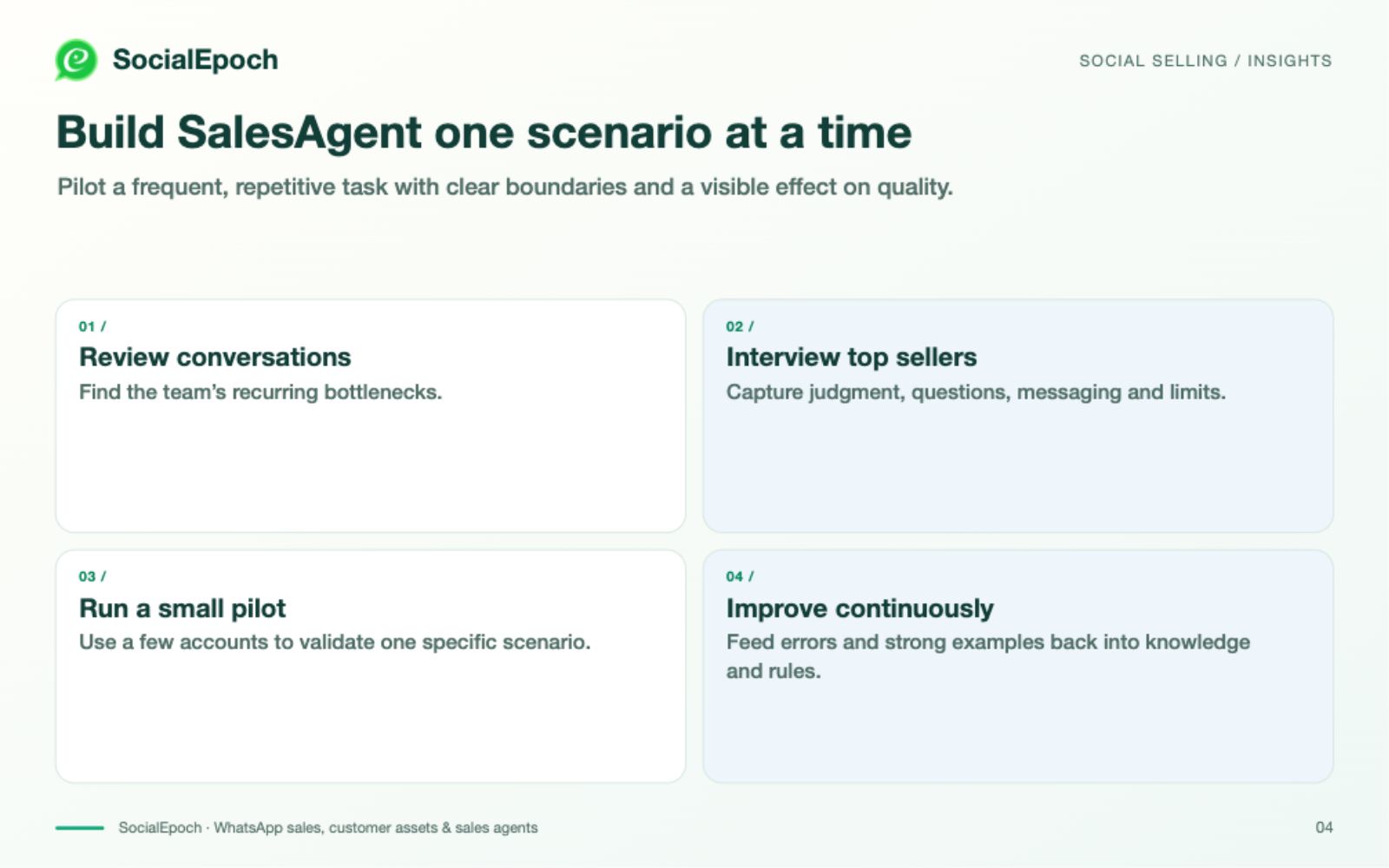
A four-step pilot starts with real conversations and recurring bottlenecks, then interviews top sellers to document criteria, questions and boundaries. Run one scenario with a small account group, then refine it using sales feedback and actual customer interactions.
Measure more than AI reply volume: are records more complete, next actions clearer, handoffs timely and representatives willing to keep using the tool?
Managers should sample real conversations to check factual accuracy, whether suggestions are adopted and whether further questions reveal misunderstandings. Feed both errors and good examples back into rules and knowledge so SalesAgent becomes closer to the business’s working needs.
Capture your company’s own sales methods
Different businesses need different agents. Export teams may prioritise enquiries, samples and pre-quote questions; brands may focus on product education, guidance and repeat purchases; distributor businesses need ongoing assessment of categories, replenishment and channel capability.
SalesAgent is neither a blank AI framework nor a generic support bot. Built on the WhatsApp account matrix, SalesEpoch customer records and real sales processes, it captures product knowledge, criteria, communication methods, SOPs and human boundaries.
Keeping customer assets and sales capability in company processes improves continuity as people, markets and scale change, while creating a foundation for continued improvement.