
Searches for SalesAgent often focus on automated replies. But sales goes beyond answering questions. When a customer says a price is too high, a top seller considers customer type, purchasing stage, specification differences and underlying concerns before deciding whether to quote, provide information or adjust follow-up.
SalesAgent focuses on that judgment, context and next action within real workflows. Built on SalesEpoch’s WhatsApp SCRM, it aims to make strong sales experience reusable within the company.
AI support and SalesAgent address different stages
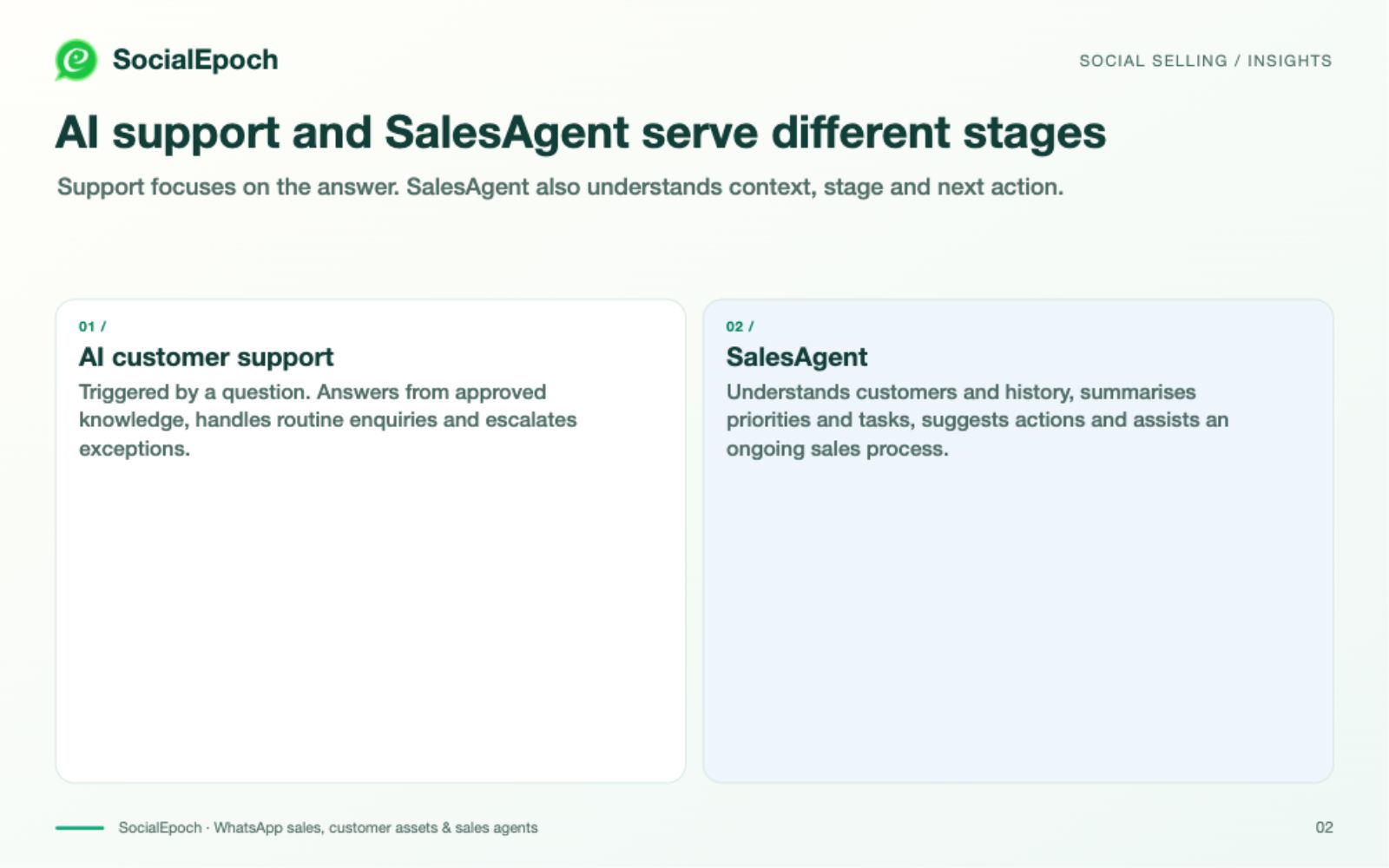
AI support generally answers incoming product, order or after-sales questions from a knowledge base, prioritising speed and accuracy. SalesAgent also needs to understand who the customer is, previous conversations, the current stage and what should happen afterward.
It is therefore closer to a sales assistant working across an ongoing relationship than a single-turn question-answering tool.
Why SalesAgent needs SCRM
Generic AI without business data does not know past purchases, ownership, pricing authority or the company’s workflow. SalesEpoch supplies identity, source, country, tags, history, owners, product information, stages and tasks.
That context lets the agent organise information for the actual customer rather than produce fluent but irrelevant answers. SCRM retains facts and process; SalesAgent uses authorised information to assist.
Which sales tasks can it support?
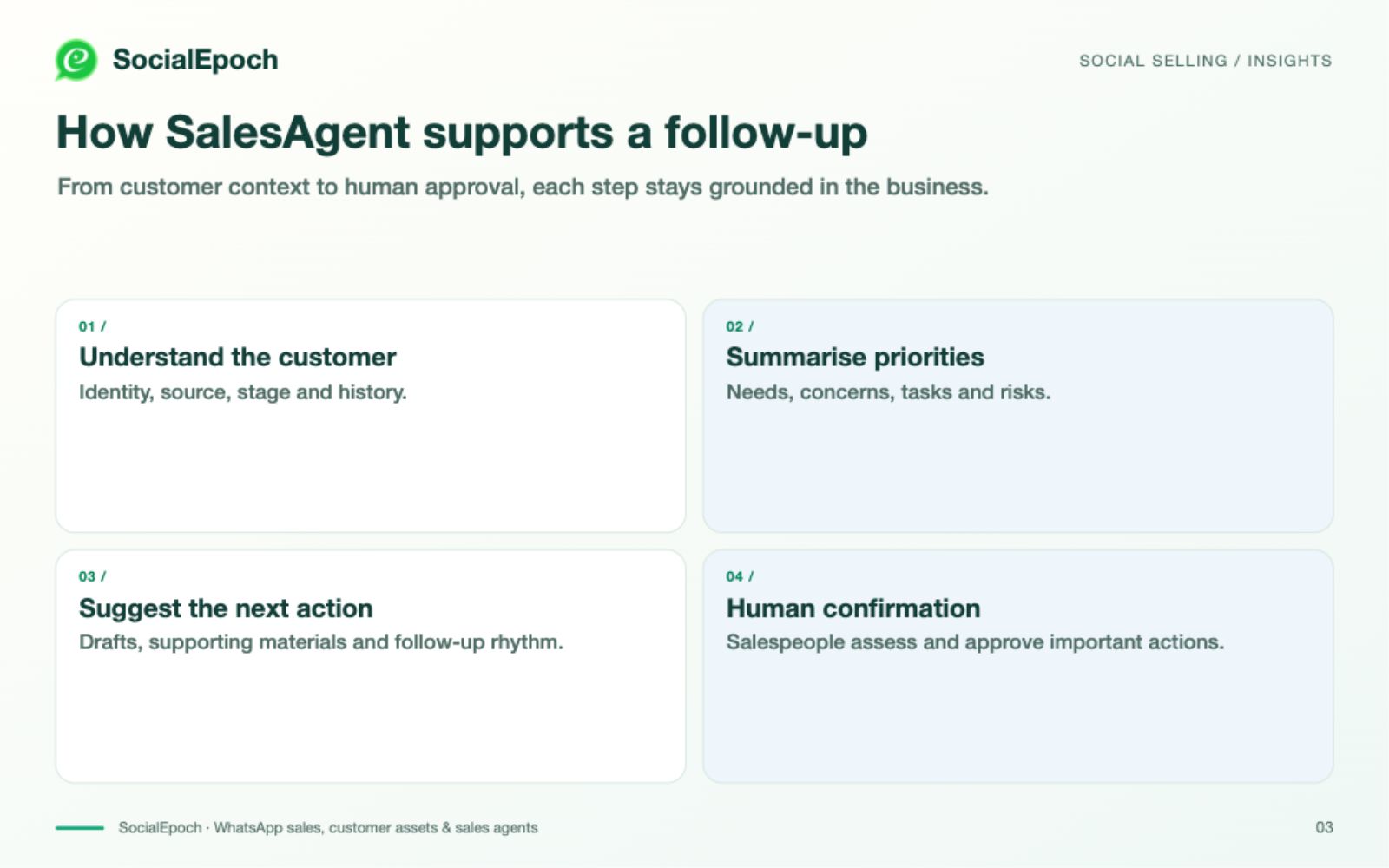
First, summarise long conversations into requirements, concerns, commitments and tasks. Second, prepare drafts from company knowledge for salespeople to verify before sending. Third, use SOPs to prompt actions such as catalogues, sample confirmation or agreed follow-up. Fourth, identify past customers potentially relevant to new products, replenishment or renewed contact.
Validate these capabilities in real scenarios and record why suggestions are adopted, modified or rejected so their applicability can improve.
Which decisions must stay with people?
Authorised staff must confirm final quotations, credit terms, contracts, custom requirements, logistics promises, complaints and complex negotiation. High-value, compliance-sensitive or relationship-sensitive issues also need timely human attention.
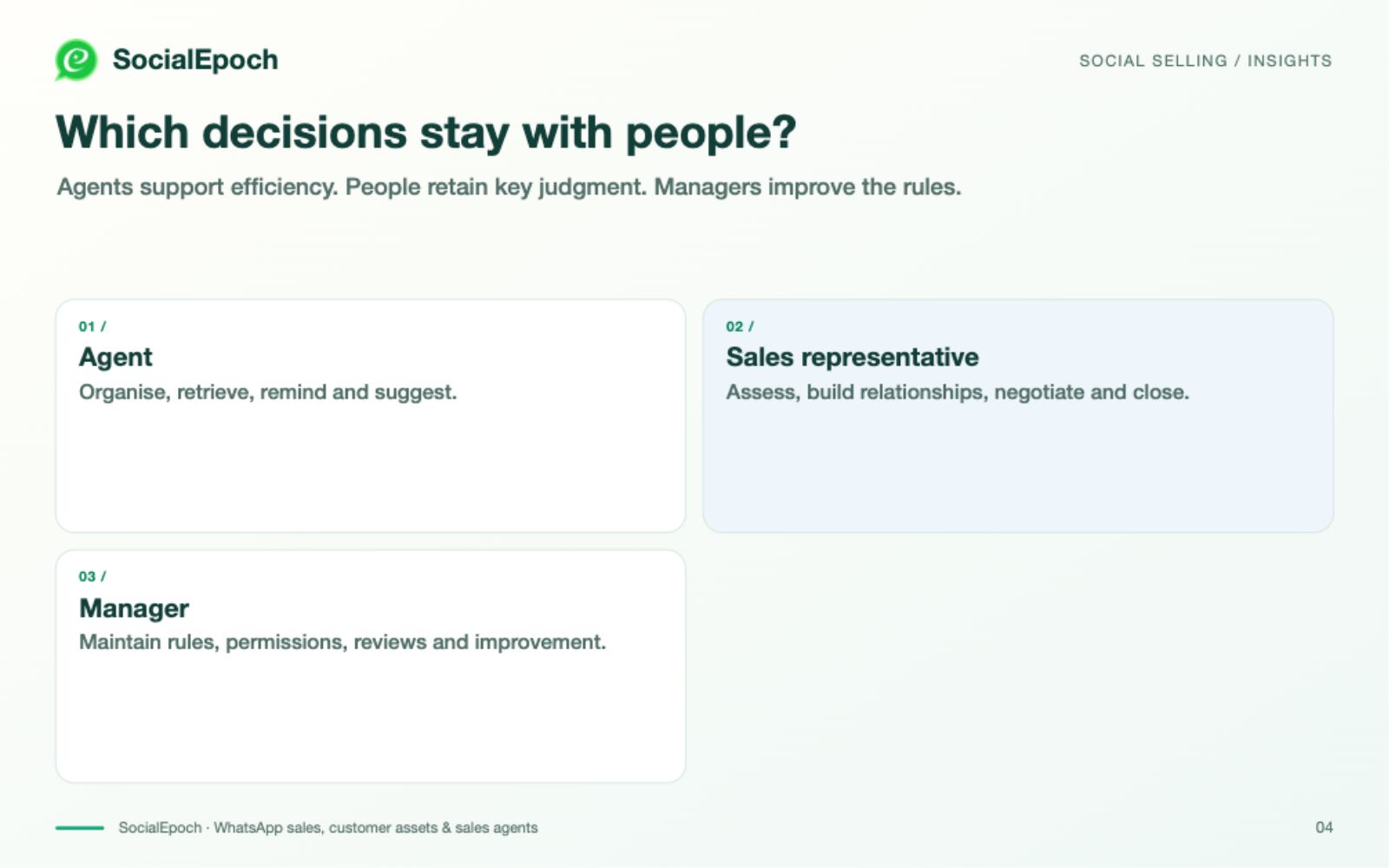
A sensible division is: agents organise, retrieve, remind and suggest; salespeople assess, build relationships, negotiate and close; managers maintain knowledge, permissions, review and learning.
Pilot a frequent scenario such as enquiry summaries, post-quote follow-up or re-engagement before expanding. The value is not replacing top sellers but making validated methods consistently available to more representatives.