
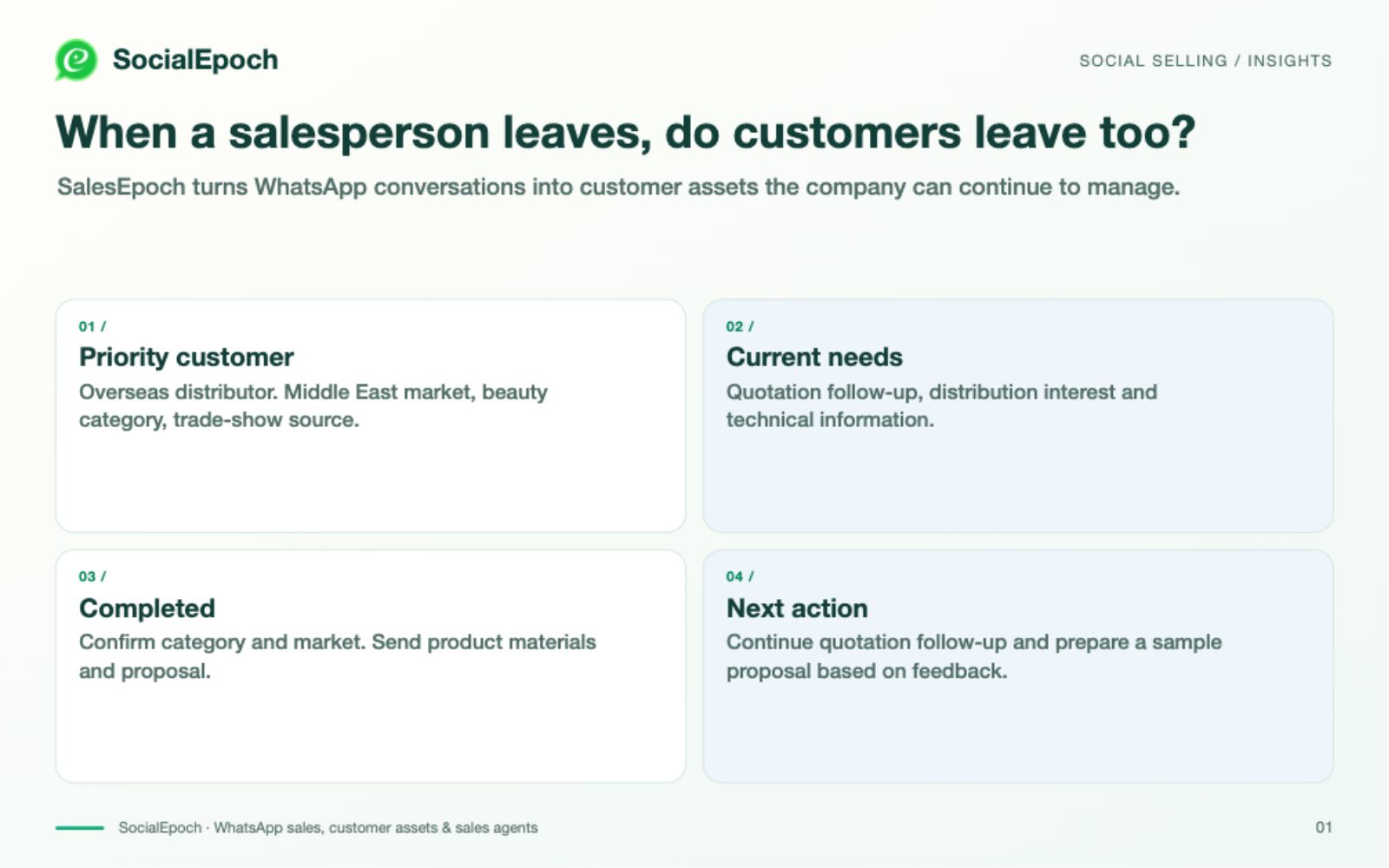
Export businesses invest in advertising, exhibitions and websites to attract international customers. Yet enquiries, needs discussions, samples and quotations often move back to a representative’s personal WhatsApp.
When identity, conversation history, sales stage and next action exist only on a phone or in memory, the company has a contact opportunity rather than a lasting customer asset. An employee departure, account change or new division of responsibilities can interrupt the relationship.
A contact list is not the same as a company customer asset
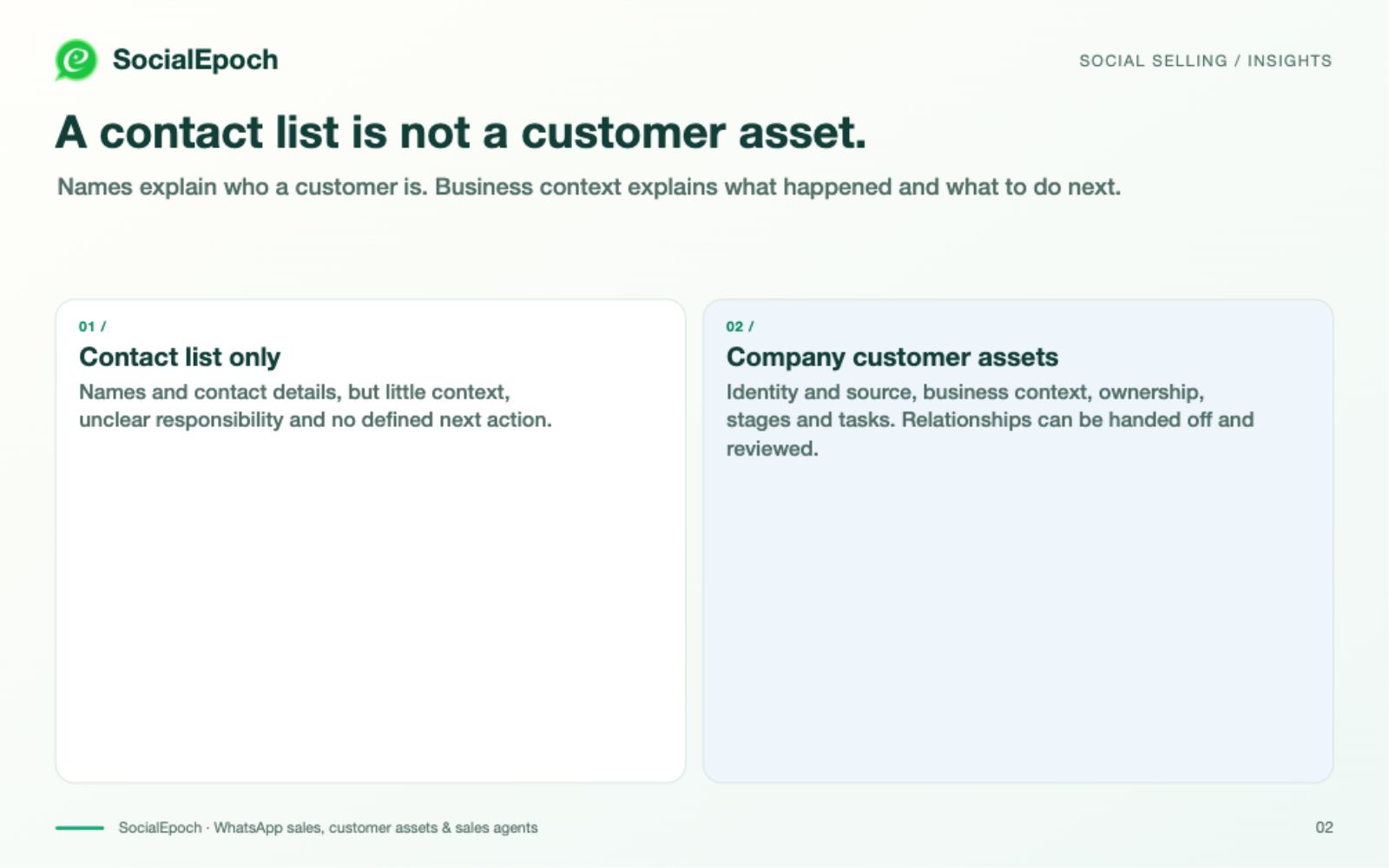
Teams may store names, phone numbers and emails in a CRM yet still struggle to take over WhatsApp customers. Contact details answer who someone is; customer assets must also capture their source, product interests, requirements, quotation progress, owner and next follow-up date.
A manageable customer asset includes basic information, conversation context, ownership, sales stage and next action. It is a relationship process that authorised colleagues can understand, continue and review—not a static address book.
This is SalesEpoch’s central WhatsApp SCRM task: moving customers from dependence on an individual account or representative into a company-managed sales process.
Five layers of WhatsApp customer information
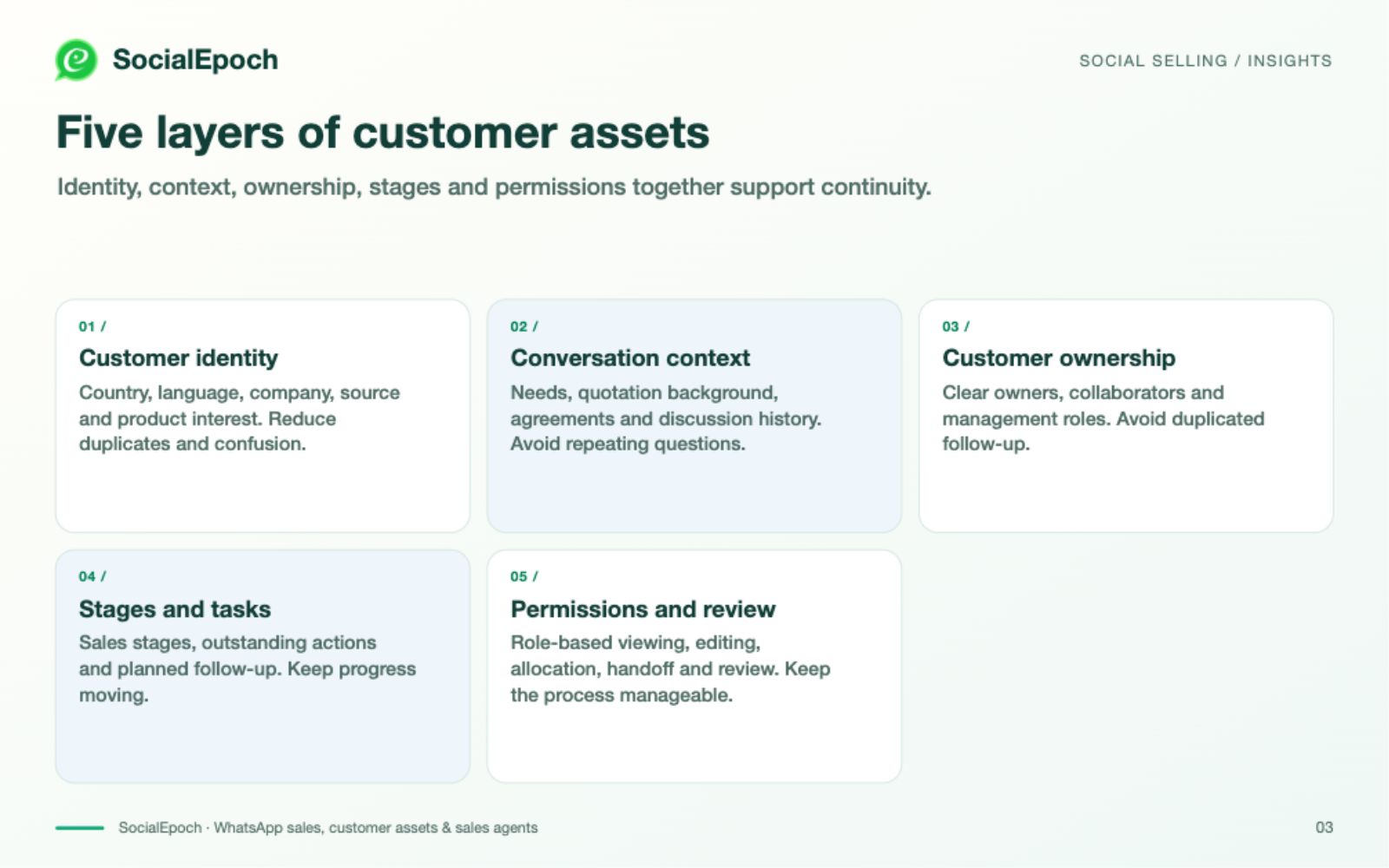
Customer identity: standardise names, countries, languages, companies, sources and product interests to reduce duplicate records and confusion.
Conversation context: previous discussions, key requirements, quotation background and important agreements explain the relationship. New owners need that context to avoid repeating questions.
Customer ownership: assign a clear owner, with collaborators and management roles where appropriate, so teamwork does not create conflicting messages.
Sales stages and tasks: connect new leads, requirements, proposals, quotations, samples, negotiation and repeat purchases to clear actions and schedules.
Permissions and review: define who can view conversations, change records, reassign owners and export data. Managers need process visibility within business boundaries, rather than unrestricted access to everything.
Bring conversations into a continuous follow-up process
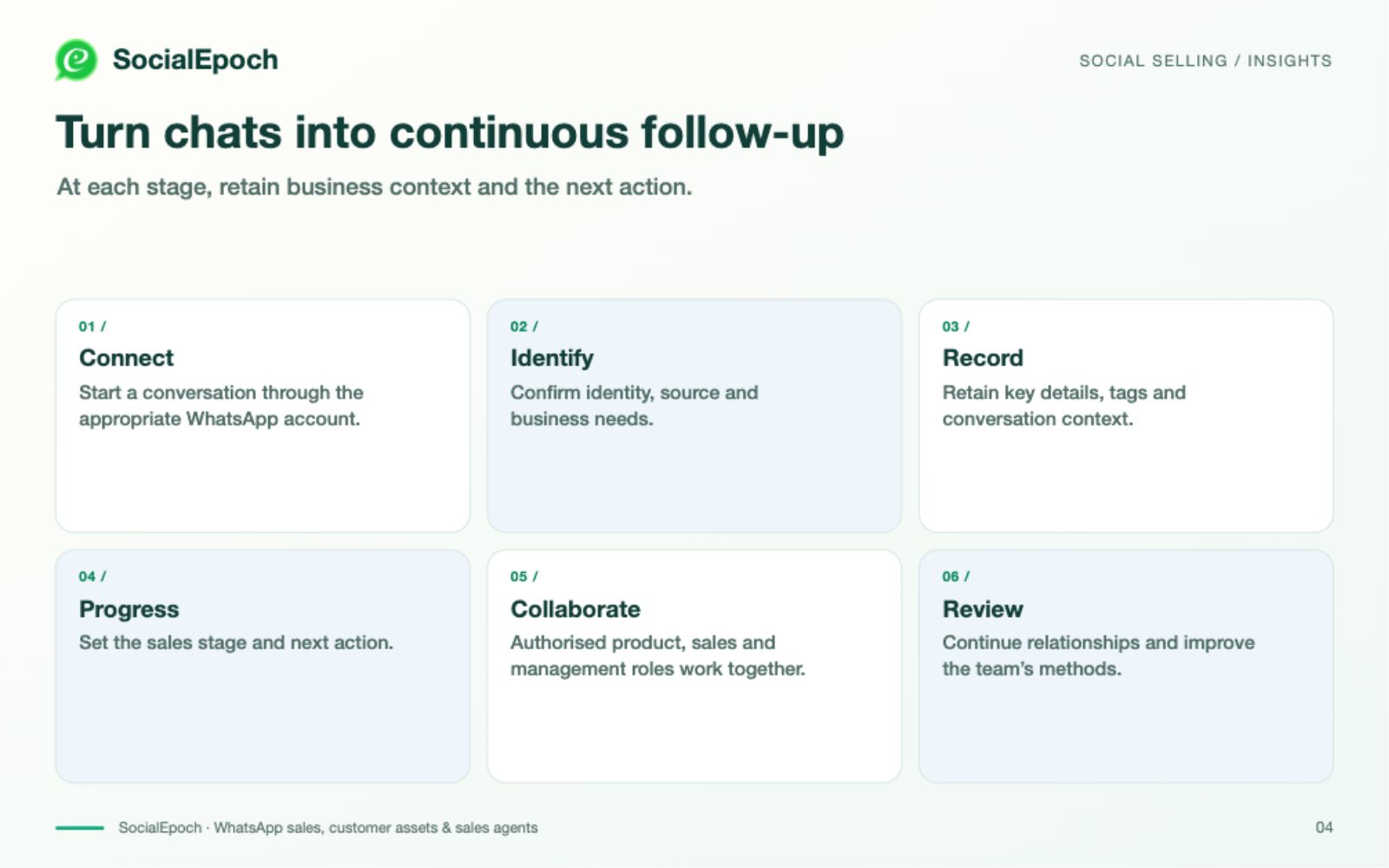
With company authorisation and configured permissions, SalesEpoch connects account touchpoints, customer identification, profiles and tags, sales stages, tasks, handoffs and review.
For example, when a representative meets an overseas distributor on WhatsApp, the team records market, category, purchasing priorities and stage—not just the number. Product colleagues can assist with technical information; quotations can trigger follow-up tasks; contacts without an immediate purchasing plan can enter longer-term nurturing.
When ownership changes, authorised colleagues can see key discussion points and outstanding actions. Managers can identify gaps through stages, tasks and follow-up cadence rather than waiting for month-end sales results.
Customer asset management is not unrestricted employee monitoring
Businesses must respect platform rules, data authorisation, role permissions and local requirements. Define the business purpose and visibility for owners, collaborators and managers instead of opening all information to everyone.
SalesEpoch supports continuity: which customers belong to company business, which records should be retained and who can take over under what circumstances. Private conversations and non-business data should remain outside that operating process. Clear boundaries support sustainable management.
Four actions to rebuild customer assets
- Standardise fields and tags to address duplicates, missing data and inconsistent names.
- Define owners, collaborators, sales stages and next actions.
- Configure viewing, allocation, editing and handoff permissions.
- Pilot one team or market and regularly check missed follow-up, ownership conflicts and stalled stages.
When identity, context, ownership, stage and tasks enter one process, WhatsApp becomes an entry point for lasting customer relationships rather than just a chat tool.
SalesEpoch records what happened and what should happen next. Once customer assets are clear, product knowledge, qualification criteria, follow-up methods and SOPs can be captured in SalesAgent, giving customer records and sales capability distinct places in the workflow.