
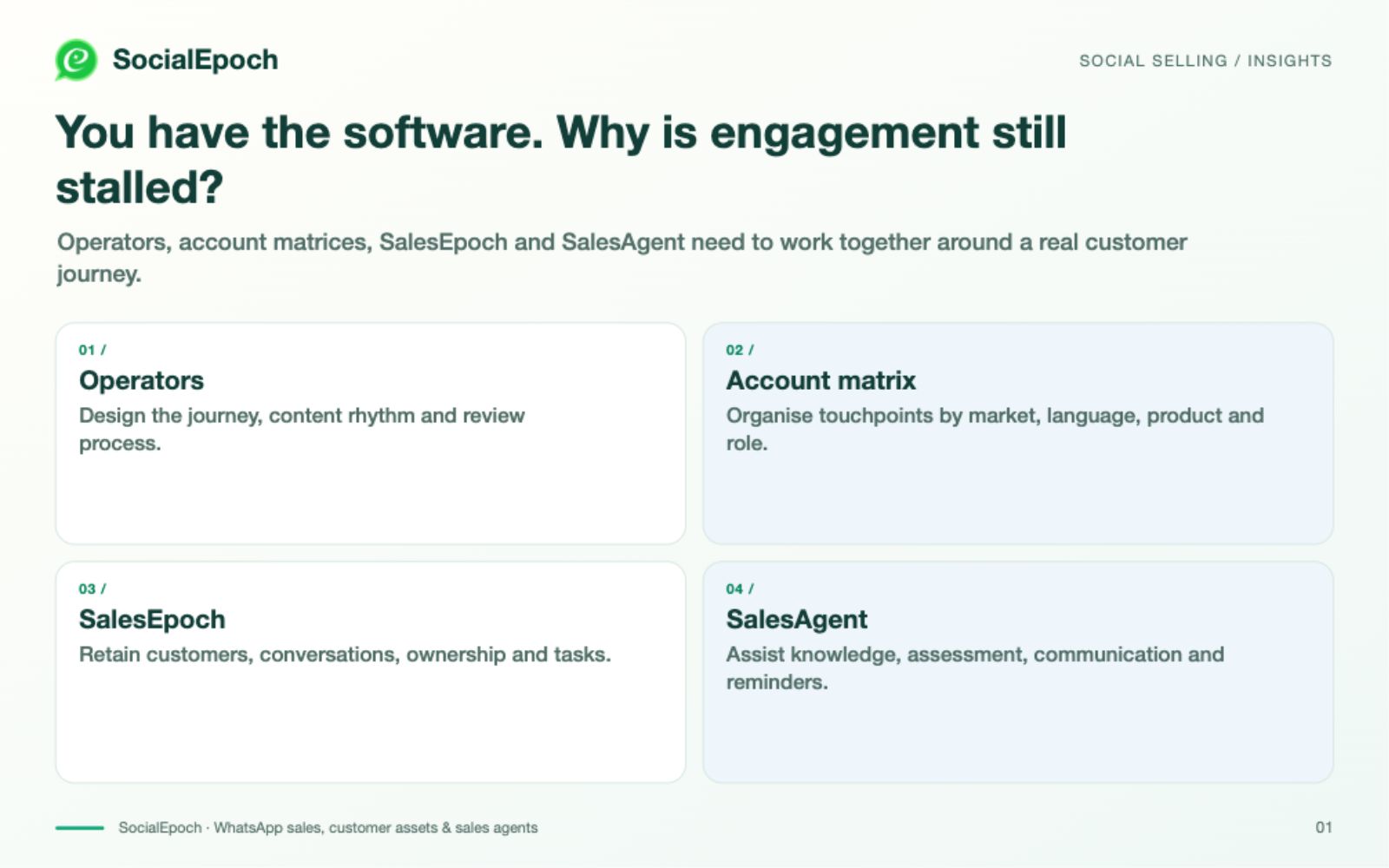
Businesses may purchase WhatsApp SCRM and connect multiple sales accounts, yet still find inconsistent tags, stalled tasks, no content plan, unmaintained automation and limited management visibility.
Software is not necessarily the problem. It can store customers, connect accounts and carry workflows, but it does not decide target customers, segmentation, outreach timing, useful content or human takeover conditions.
SocialEpoch’s managed engagement addresses putting those tools to work. It is not merely sending messages or outsourcing support: operators, account matrices, SalesEpoch and SalesAgent collaborate around a real customer journey.
Tools do not automatically create operating capability
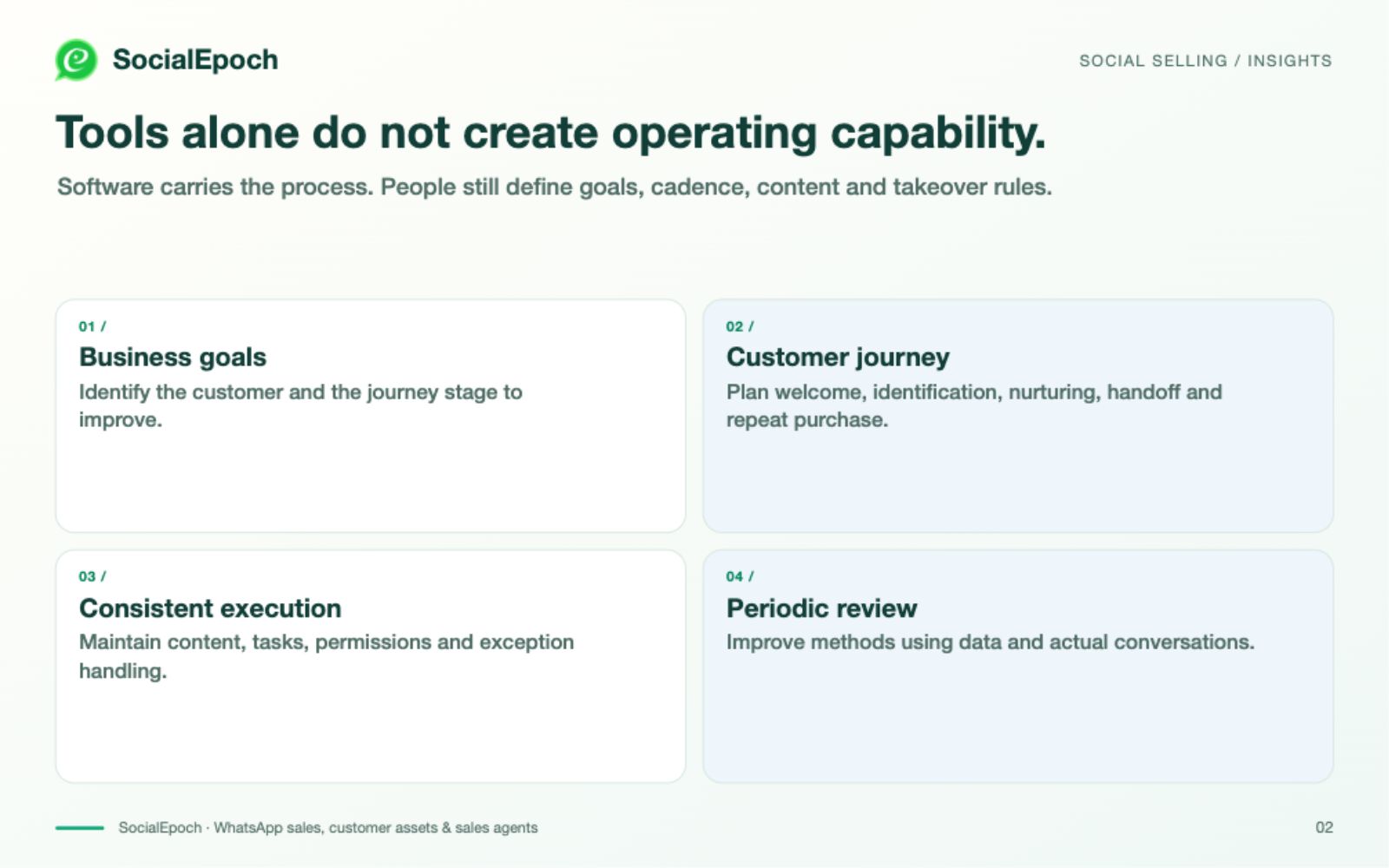
A team can connect accounts without knowing whether to divide work by country, language, product or stage; create tags without usage rules; or configure automatic replies without deciding what requires human judgment.
Operating capability involves setting business goals, designing the journey, organising continuous execution and reviewing data and conversations. Missing any part can leave the system as a storage tool instead of a process that advances relationships.
Prospecting, requirement confirmation, quotation follow-up, re-engagement, repeat purchases and referrals require different content, cadence and owners. A one-time setup cannot run them indefinitely.
Four roles working together
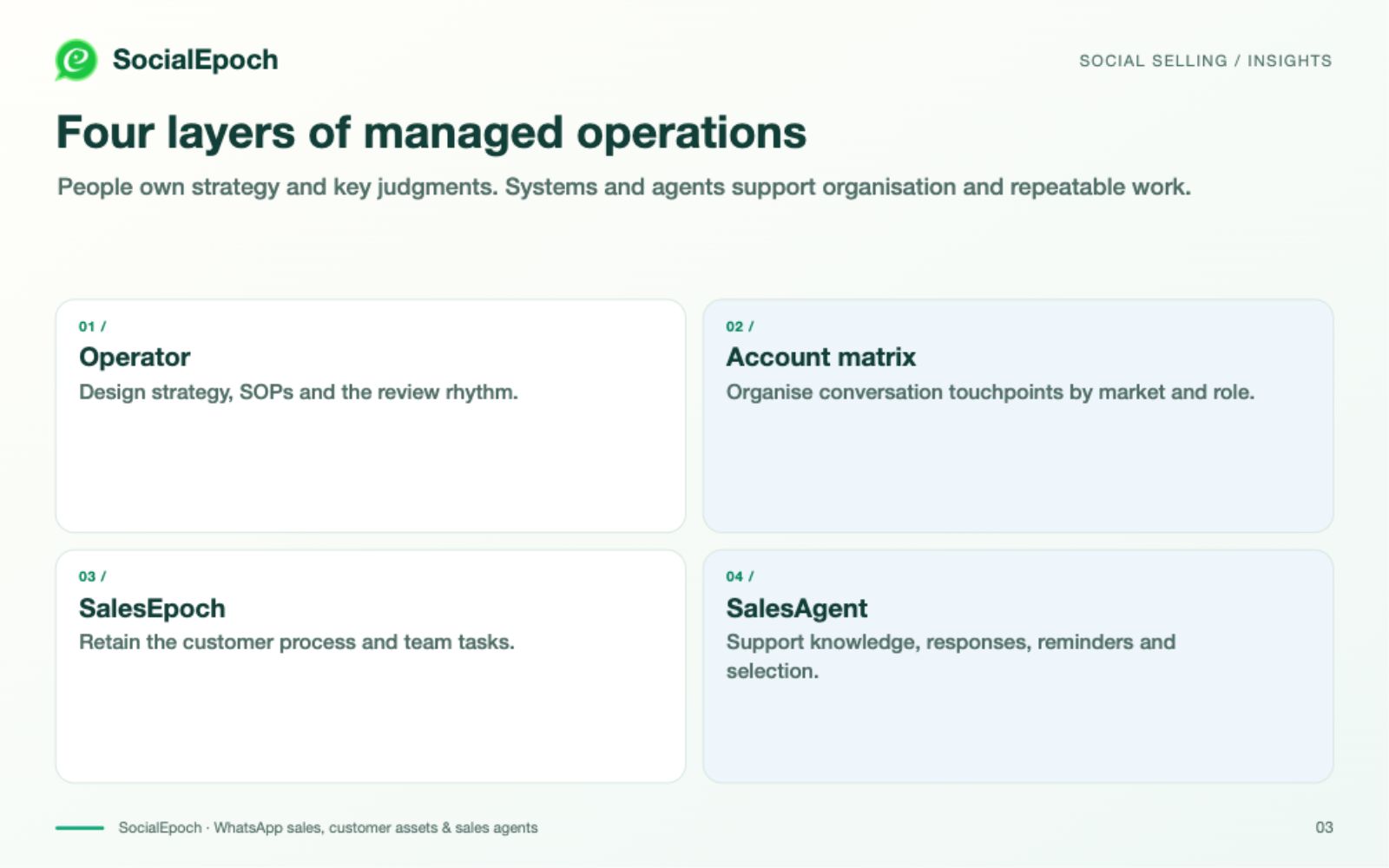
The operator understands products, target customers and sales, then designs segmentation, content rhythm, follow-up SOPs and handoff conditions.
The WhatsApp personal sales-account matrix organises entry points by market, language, brand, store or role so customers enter appropriate conversations.
SalesEpoch retains identity, context, ownership, stages, tasks and permissions so actions can be coordinated, handed off and reviewed.
SalesAgent captures knowledge, assessment criteria, communication methods and SOPs as reusable capabilities. Within authorisation and human review, it assists requirement summaries, response preparation, reminders and remarketing selection.
The layers complement one another. Operators alone can be costly; software alone lacks ongoing strategy; excessive automation can lose touch with reality. Managed operations coordinates people, systems and agents within clear boundaries.
Define responsibilities between the business and service team
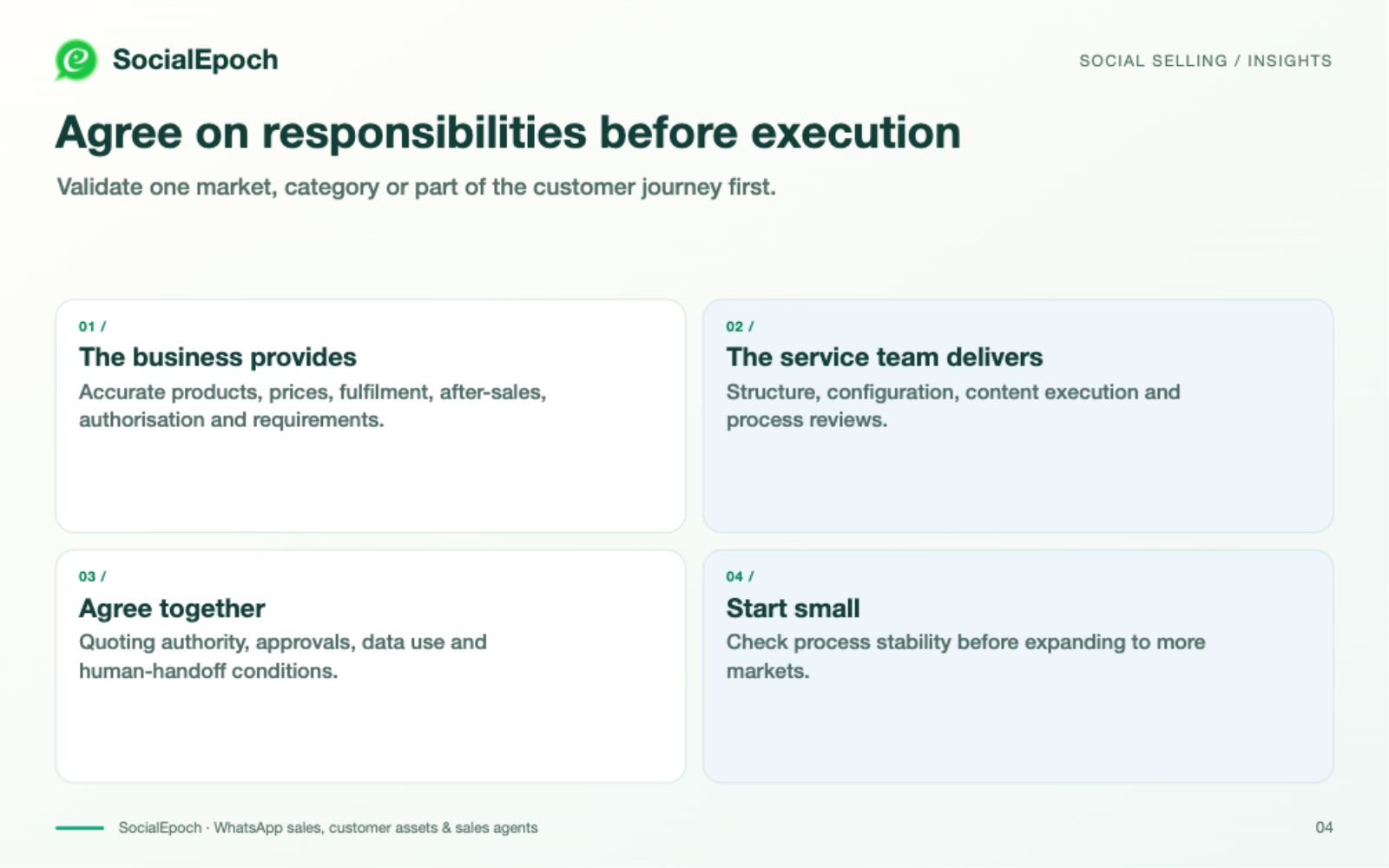
The customer business supplies accurate products, pricing and authority, fulfilment capacity, after-sales policies, compliance requirements and necessary customer sources. It defines who can quote, confirm delivery, handle complaints and approve special proposals.
The operations team handles diagnosis, account and customer structures, system configuration, segmentation, content, agent rules, records and periodic reviews. Both parties agree on data use, permissions, approvals and pilot process indicators.
Managed services cannot fix unreliable products, constantly changing prices or inadequate fulfilment. Stop marketing when a customer declines contact, and observe applicable platform and target-market rules.
The service suits businesses with customer sources, products and fulfilment but no dedicated WhatsApp engagement team, or teams with software and staff whose execution is inconsistent. Businesses without a clear product or market should validate those fundamentals first.
Validate one part of the customer journey
Start with one market, category or journey instead of every country and customer. For example, test identification, follow-up and sales handoff after a website enquiry, or segmentation and re-engagement of previous quotation contacts.
First check ownership, information completeness, task cadence, handoff timing and the team’s ability to learn from conversations. Expand accounts, markets and customer types after the process becomes stable.
Managed engagement builds a mechanism that keeps working, rather than merely sending more messages. Software supplies the foundation, agents assist execution, operators design and review, and the company handles key judgments and fulfilment. Together they enable customer relationships to accumulate over time.