
Exporters searching for WhatsApp multi-account management often first ask how many accounts can run on one computer. More accounts soon raise other questions: who covers each market, are customers contacted twice, where is history stored, and how are accounts and customers handed over after departures?
Account count describes quantity; a matrix describes organisation. SocialEpoch combines accounts, customers, team workflows and systems into infrastructure for proactive selling, rather than simply adding logins.
What belongs in a personal sales-account matrix?
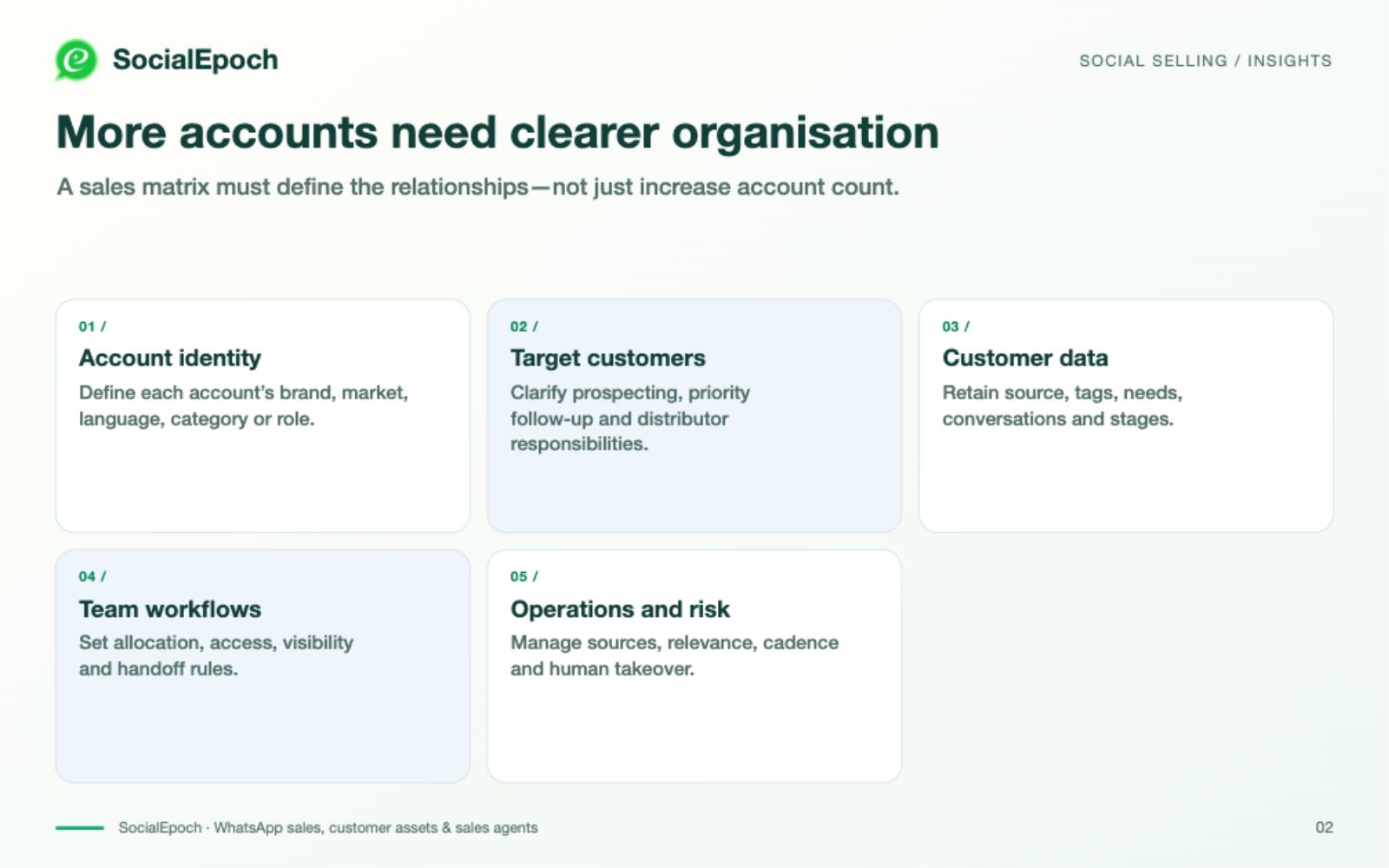
Define five things: account identity by brand, country, language, category or role; target-customer responsibility for prospecting, priority follow-up or partner maintenance; customer data including source, tags, needs, history and stage; team allocation, permissions, visibility and handoffs; and operating controls covering data sources, content relevance, cadence and human takeover.
Without these rules, more accounts generally create more silos and duplicated work.
How does it differ from WhatsApp Business API?
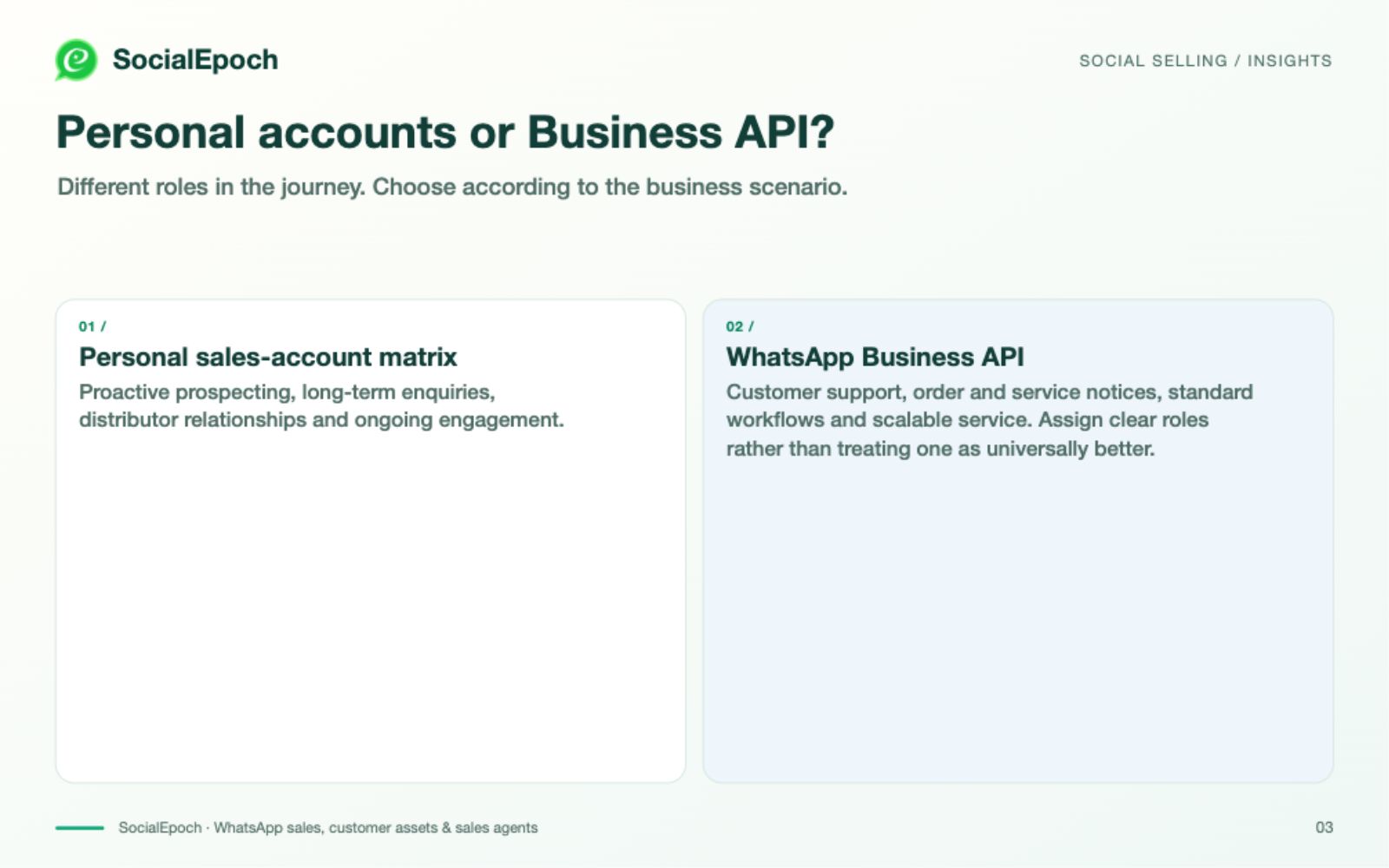
Business API suits support, order notices, verification codes, after-sales and standardised service. Personal sales-account matrices suit prospecting, long-term follow-up, distributor management and ongoing customer relationships. Allocate work according to the journey.
For example, support can use Business API for routine enquiries and notifications while representatives continue high-interest conversations through personal accounts. Custom products, B2B purchasing, high-value sales and distribution often require repeated clarification and individual trust.
Five layers of differentiation
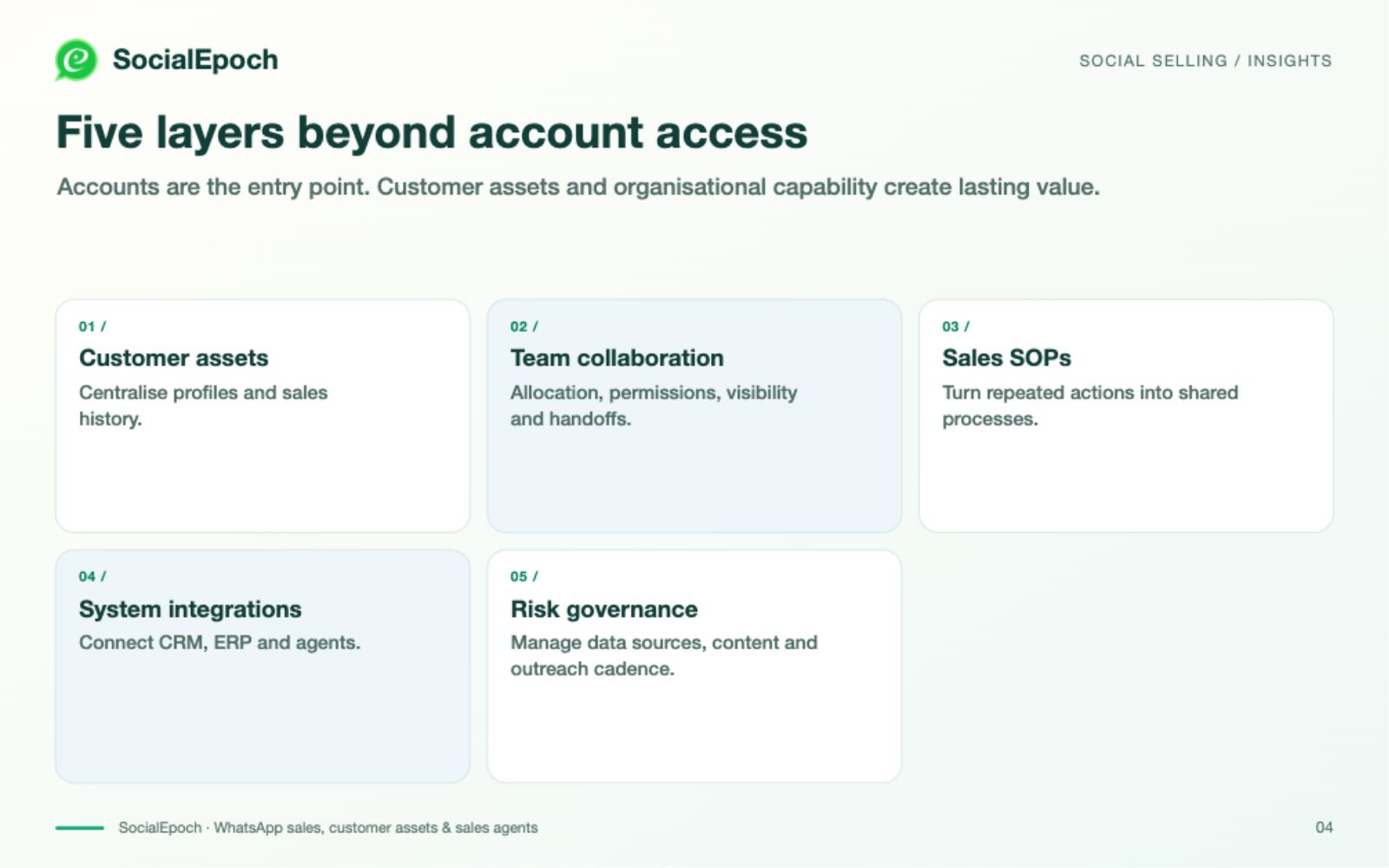
Customer assets: SalesEpoch retains profiles and conversations. Collaboration: allocation, progress visibility and handoffs. Sales SOPs: standardise frequent introductions, materials and quotation follow-up. Integration: conversational APIs connect CRM, ERP, automation and agents. Risk governance: manage account identities, recipients, cadence and takeover conditions.
Using customer context, SalesAgent can also summarise discussions, prepare suggestions and flag next actions, while salespeople confirm important commercial steps.
Design the process before increasing account count
An account matrix is not indiscriminate messaging and cannot guarantee risk-free accounts. Define markets, customer profiles, workflows and roles before deciding account volume and groupings.
SocialEpoch’s differentiation is the move from more logins to customer asset management and team sales processes. Accounts provide entry points; relationships managed over time provide lasting value.
Combining account responsibilities and customer data also helps managers review follow-up quality across markets and improve team methods.